
Friday, 7 June 2013
Polish Shops in the North East of England
Friday again, and another trip to my favourite Polish Shop - Malgosia's in Newcastle for my Friday treat - a couple of bottles of Baltika No 4, some smetana and a bag of frozen pelmeni.
Following the demise of Newcastle's only Russian shop - The Samovar - a couple of years ago (which was also located in Newgate Shopping Centre, Newcastle), I had no opportunity to purchase some of the Russian delicacies I had previously enjoyed at The Samovar. Malgosia's Polish shop fills that gap - it has a large selection of Polish and Lithuanian food, but it also stocks a range of Russian products too.
Polish Families in the North East of England: Polish Shops in the North East of England


Polish shops Małgosia's and European Foods: Coś dla ochłody!
Polish shops Małgosia's and European Foods: Coś dla ochłody!: Wygląda na to, że do North East przyszło lato, a wraz z nim - wysokie temperatury! W końcu! Zapraszamy po orzeźwiające napoje prosto...
Thursday, 6 June 2013
Can Soviet hotels halt the destruction of Moscow?
A recent report in the Moscow Times suggested that there was now a preference for renovating Soviet era hotels rather than demolish and reconstruct them.
Is this a sign that the tide is turning against the trend of the last twenty years of demolishing buildings- irrespective of their architectural merits or historical value? I certainly hope so. There has been vandalism on a grand scale over recent years - especially in the capital, Moscow, and Muscovites have mourned the loss of their architectural heritage - even despite the fact that some of these buildings, Soviet-era ones, were themselves erected on the spot where similar level of destruction had previously taken place - ancient buildings destroyed and historic neighbourhoods cleared to make way for Soviet modernist thoroughfares (eg Novy Arbat), monumentalism, socialist realist buildings and Stalinist wedding cakes etc.
Much of this modern destruction has taken place for spurious reasons often under corrupt or questionable practices of awarding construction contracts, building permits. Some have had damage inflicted upon them deliberately eg arson in order to leave no alternative to demolition, others have been destroyed only have a replica (often a pale imitation of the original) built in its place - derided as "mock heritage" or "sham replicas" (The Hotel Moscow springs to mind here).
Pressure groups have arisen to call a halt to what appears to be wanton destruction and irreversible changes to the character of streets and neighbourhoods. Moscow Preservation Society is one such group http://www.maps-moscow.com.
While it is often cheaper build from scratch than to renovate an old building and equip it to modern standards and conveniences, it seems that in the hotel industry at least, the desire for a quick turn around and short lead time to revenue generation is driving developers to renovate soviet era hotels rather than demolish and rebuild. New construction can take 15 to 20 months, whereas renovation could take as little as nine months, according to statistics from the St. Petersburg-based construction company STEP. In addition, the old hotels can even continue operating on some floors while other parts are undergoing renovations. But in some cases renovation is not the best option - the carcases of Soviet-era hotels , with their relatively small rooms and low ceilings, places a physical restriction on developers; it is difficult to incorporate modern features into an existing structure while meeting the space and convenience needs of the modern traveller.
Is this a sign that the tide is turning against the trend of the last twenty years of demolishing buildings- irrespective of their architectural merits or historical value? I certainly hope so. There has been vandalism on a grand scale over recent years - especially in the capital, Moscow, and Muscovites have mourned the loss of their architectural heritage - even despite the fact that some of these buildings, Soviet-era ones, were themselves erected on the spot where similar level of destruction had previously taken place - ancient buildings destroyed and historic neighbourhoods cleared to make way for Soviet modernist thoroughfares (eg Novy Arbat), monumentalism, socialist realist buildings and Stalinist wedding cakes etc.
Much of this modern destruction has taken place for spurious reasons often under corrupt or questionable practices of awarding construction contracts, building permits. Some have had damage inflicted upon them deliberately eg arson in order to leave no alternative to demolition, others have been destroyed only have a replica (often a pale imitation of the original) built in its place - derided as "mock heritage" or "sham replicas" (The Hotel Moscow springs to mind here).
Pressure groups have arisen to call a halt to what appears to be wanton destruction and irreversible changes to the character of streets and neighbourhoods. Moscow Preservation Society is one such group http://www.maps-moscow.com.
While it is often cheaper build from scratch than to renovate an old building and equip it to modern standards and conveniences, it seems that in the hotel industry at least, the desire for a quick turn around and short lead time to revenue generation is driving developers to renovate soviet era hotels rather than demolish and rebuild. New construction can take 15 to 20 months, whereas renovation could take as little as nine months, according to statistics from the St. Petersburg-based construction company STEP. In addition, the old hotels can even continue operating on some floors while other parts are undergoing renovations. But in some cases renovation is not the best option - the carcases of Soviet-era hotels , with their relatively small rooms and low ceilings, places a physical restriction on developers; it is difficult to incorporate modern features into an existing structure while meeting the space and convenience needs of the modern traveller.
I would hope that the trend to renovate rather than destroy continues and expands beyond the hotel industry. Perhaps these commercial pressures facing developers will help to avoid a repeat of the destruction of old buildings that took place under Stalin, and will be encouraging for the growing conservation movement in Moscow. There are grounds for optimism. The Moscow Preservation Society made up of locals and foreigners, admits that the Russian government
is not used to listening to pressure groups, but says consciousness, via
newspapers and blogs, is growing.
Thursday, 2 May 2013
Happy Paskha!
Easter always occurs later in the year in orthodox
Christian countries than in Western christian churches where Easter falls
around the time of the March equinox. This is because Orthodox churches base their
Easter date on the Julian calendar, which differs from the modern Gregorian
calendar that is used by many western churches (and is the most universally
accepted and used calendar), and is about 15 days behind the Gregorian calendar. Russia adopted the modern calendar in 1918
which is why the 1917 Russian revolution celebrated in November was called the
October revolution.
This year, Easter is on 5 May which, incidentally,
falls on the same day as it did in 2002 when I was in Moscow. In many respects, this added a magical quality to visits to churches, cathedrals and

At Kolomnenskoye, the former royal estate to the southeast of the city centre of Moscow, there was a long table crammed with Easter cakes, Kulichi, awaiting bleesing. Кулич is a traditional Easter bread
in Russia and is eaten on the Easter breakfast with
decorated eggs. Kulichi are decorated with
colored icing two letters - ХВ, which means
"Христос Воскрес" (Christ is risen).


There also seemed to be some kind of military celebration going on there at the same time - it appeared to be some kind of passing out parade.


Aeroflot Smells like Mr Men Soap
Have you ever noticed how a smell can immediately to transport you back to an event, place or circumstances where you first encountered it? I think that it has long been recognised that out of our five senses, smell is one of the most powerful - particularly in evoking memories.
 I had such an experience of this effect last night when I was washing my kids, when I opened a tube of soap i've not used before. It was Mr Men soap - and it had a peculiar fruity smell. It immediately reminded me of my first flight to Russia on an Ilyhshin 76 Aeroflot flight in 1988. I can't recall exactly what the source of the smell was on the plane (because I don't think I knew at the time), but I attributed it to the smell of the free fruit drink served on the flight - it was billed as "lemonade" but it neither looked nor tasted like lemonade - it was a dark colour which made it look more like apple juice. It was either that or the fuel smell in the fuselage, or perhaps both. I dunno, but I was immediately taken back to that flight as soon as I smelled this soap.

Friday, 19 April 2013
Lada 2101 first produced 43 years ago
The Moscow Times today marks the 43rd anniversary of the Lada 2101:
"Forty-three years ago today, on April 19, 1970, the first VAZ-2101 rolled off the assembly line. Better known as a Lada outside of the former Soviet Union, the VAZ-2101 was formed as a collaboration between Fiat and the Soviet government. It was a functional, family car that is currently a collector’s item for car aficionados"
To mark the occasion, here is some pictures of Ladas:


"Forty-three years ago today, on April 19, 1970, the first VAZ-2101 rolled off the assembly line. Better known as a Lada outside of the former Soviet Union, the VAZ-2101 was formed as a collaboration between Fiat and the Soviet government. It was a functional, family car that is currently a collector’s item for car aficionados"
To mark the occasion, here is some pictures of Ladas:


Friday, 12 April 2013
Yuri Gagarin

After circling the planet, Gagarin became an international superstar and undertook a world tour, which included London which he visited in July 1961, three months after his legendary flight - meeting the Queen and the Prime Minister, Halrold McMillan, as well as members of the Foundry Workers Union during his visit, as he had worked as a foundryman before his career in aeronautics,.
Vostok 1 marked his only spaceflight, but he served as backup crew to the Soyuz 1 mission (which ended in a fatal crash). Gagarin died in 1968 when the MiG 15 training jet he was piloting crashed - he was 34 years old.
The statue of him, pictured here, has recently been moved from Admiralty Arch to a permanent home at the Royal Greenwich Observatory in London. On 7 March 2013, there was a ceremony held there to celebrate its new home.
In 2011, for the 50th Anniversary of his flight, a statue of Yuri Gagarin was unveiled in London just off The Mall, next to Admiralty Arch, and features the cosmonaut in his flight suit and standing on a globe. A host of dignitaries were present for the unveiling, including the cosmonaut's daughter, Elena Gagarina.
"The 12th of April 1961 was one of the most remarkable days in history, uniting all people in all countries on all continents," said Gagarina, who is the current director of the Kremlin Museums.
Yelena Gagarina was also present at the unveiling of the statue at its new Greenwich home in March and said “I would like to thank all people living in London for the support of the idea to place the statue in Greenwich park. I hope my father's statue will be evoking only smiles, and I feel very happy today for Yury Gagarin, cosmonaut and man, who was dreaming of the sky, and at the same time always dreaming of home. And finally he found this beautiful home in Greenwich”.
Yelena Gagarina was also present at the unveiling of the statue at its new Greenwich home in March and said “I would like to thank all people living in London for the support of the idea to place the statue in Greenwich park. I hope my father's statue will be evoking only smiles, and I feel very happy today for Yury Gagarin, cosmonaut and man, who was dreaming of the sky, and at the same time always dreaming of home. And finally he found this beautiful home in Greenwich”.
The figure is a copy of one sited in the town of Lubertsy, just outside Moscow, where Yuri Gagarin trained as a foundry worker in his mid-teens. The original was made in 1984 to celebrate what would have been the cosmonaut's 50th birthday.
Tuesday, 9 April 2013
RIP Mrs Thatcher

She maintained an outspoken opposition to communism that earned her the title The Iron Lady from the Soviet Union's Defense Ministry newspaper; however, much has been made in her role in ending communism in Eastern Europe. Whilst I think her role in this has been exaggerated - these systems imploded without much intervention from the West - she was instrumental in bringing about the end the Cold War through her championing of freedom and democracy, her belligerent stance towards the Soviet Union and forthright defence of the UK's nuclear deterrent. Key to this, though, was recognising the reforming potential of Mikhail Gorbachev when he first rose to prominence in the Politburo in 1984. Following her meeting with him in 1984, he famously described him as a a man with whom she can do business. After Gorbachev became Soviet leader in 1985, she continued to develop a close relationship with him; this helped to thaw relations between the USA and USSR, and brought the two sides together in a constructive dialogue on arms reduction.
She was loved and loathed in equal measure in the UK. My own view? Well, I spent much of the eighties as a left wing student despising her and campaigning against her (well for 2-3 years). In 1984, I attended a protest march in Newcastle when she was visiting the North East. To my shame, I took with me to the rally two eggs which I had intended to lob at her (given the opportunity). Fortunately for her (and me) both these eggs had cracked open in my coat pocket - long before I had reached Newcastle! Within a very short time, my political views changed considerably - especially once I had managed to get a job in a nationalised industry (after a short period of unemployment) where I saw at first hand the profligacy and inefficient work practices she railed against which were so common in the public sector - I reassessed my views on her and became to admire what she had done for the country, to the extent that I was sad when she was forced out of office in 1990.
Her economic reforms led to the decimation of the UK's heavy industry - it may have been in parts moribund, sclerotic, inefficient and loss making, but her policy of refusing to subsidise ailing industries hastened their terminal decline. The North of the UK, with its predominance of heavy industry, was disproportionally affected by the rapid industrial decline; in areas of the North-East, where I live, where there was a reliance on such industries as coal mining, ship building, steel manufacturing, some communities never recovered from the loss of jobs in these sectors. However, a paradox of the eighties recession, long recognised by economists, was that despite high unemployment and a shrinking economy, consumer spending continued to grow. Unemployment rates of 10-15% were a tragedy for those who were part of that statistic, but it appears that remaining 85-90% of the workforce with jobs were doing all right, thank you very much. This probably explains her electoral popularity. On balance, I believe that Mrs Thatcher was one of the greatest post-war leaders the UK has had. She transformed the ailing UK economy and its political landscape in the UK, put the great back in Great Britain.
Tuesday, 2 April 2013

Tuesday, 26 March 2013
Berezovsky Dead
Boris Abramovich Berezovsky dead
Strangled? Hanged? autoerotic asphyxiation? Or was he murdered by the secret services (British or Russian). Either side might have wanted him dead - to prevent him from revealing (possible) UK involvement in the Litvinenko murder or providing evidence of Putin's corruption (past or present); who knows - to speculate is to get sucked into the strange, deluded and paranoid world of conspiracy theorists; its pointless.But it was own machinations, his muddying of waters, a lover of intrigue, a conspiracy merchant diminished his credibility as critic of Vladimir Putin and his increasingly authoritarian regime in Russia. His analysis of Putin might have been largely correct but his argument was tarnished by his hubris and desire for revenge against his erstwhile protégée.
Berezovsky loved the cut and thrust of Russian politics; loved having power, influence and control - perhaps more so than his great wealth - and has been described as his playing politics as a game of chess where only he is allowed to move the pieces. He was the embodiment of the wild 1990s, a former mathematician who made a great fortune through Russia's privatisation program, widely regarded as being corrupt. He was close to the Yelstin family, became a close advisor to Boris Yeltsin and reportedly played a key part in the rise of Vladimir Putin as Yeltsin's successor as Russian president. However, once Putin became president, Berezovsky was deprived of his influence and his control - his fall was spectacular.
He was exiled in London to avoid corruption charges, and an inevitable prison sentence in Russia, and became obsessed with revenge on Vladimir Putin. It would be of no surprise to me that he hand in the Litvinenko poisoning. Possibly a convoluted attempt at implicating the Russian authorities that backfired.
Friday, 22 March 2013
Friday Baltika treat from Malgosia's Polish shop
Just been to the polish shop, Malgosia's, in Newcastle to get myself a Friday treat - some bottles of Baltika.beer. Wehey!
This is primarily a Polish shop but it does have a good stock of Eastern European products - including Russian. Got some smetana as well as a Latvian tin of sprats in oil.
Małgosia’s Shop: Polish, Czech and Lithuanian Food
Unit 23,
Newgate Shopping Centre,
Newcastle,
NE15RE
https://www.facebook.com/pages/Polish-Shops-Malgosias-i-European-Foods/256761667707667


This is primarily a Polish shop but it does have a good stock of Eastern European products - including Russian. Got some smetana as well as a Latvian tin of sprats in oil.
Małgosia’s Shop: Polish, Czech and Lithuanian Food
Unit 23,
Newgate Shopping Centre,
Newcastle,
NE15RE
https://www.facebook.com/pages/Polish-Shops-Malgosias-i-European-Foods/256761667707667
Thursday, 21 March 2013
Arctic Convoy Veterans receive medals
After 67 years, veterans of the WW2 Arctic convoys are to receive medals from the UK Government.


The Arctic Convoys, described as "worst journey in the world" by Winston Churchill, took supplies to the Soviet Union from 1941 to 1945. More than 3,000 men died while on the convoys.
Following a long campaign to get the veterans recognised (by the UK Government) for their extraordinary bravery, the veterans will now receive the new Arctic Star medal and Bomber Command clasp. The first of up to 250,000 presentations were made by Prime Minister David Cameron at a ceremony in Downing Street who hailed them as a "group of heroes".
As I mentioned in a blog post of 7 March 2013 (my-first-trip-to-russia.html), I was privileged to meet one such veteran in 1988 who was in my tour group. Glyn Williams, pictured here, had received a medal from the Soviet Government in 1985, which was offered to British servicemen to commemorate the 40th Anniversary of Victory in the Great Patriotic War.
Following a long campaign to get the veterans recognised (by the UK Government) for their extraordinary bravery, the veterans will now receive the new Arctic Star medal and Bomber Command clasp. The first of up to 250,000 presentations were made by Prime Minister David Cameron at a ceremony in Downing Street who hailed them as a "group of heroes".
 |
| Arctic convoy veteran - Glyn Williams |


Monday, 18 March 2013
1st Space Walk - 48 years ago
Forty-eight years ago today, on March 18, 1965, cosmonaut Alexei Leonov became the first person to take a spacewalk when he, attached to a tether, spent 12 minutes floating outside the Voskhod-2 spacecraft. (reblogged from The Moscow Times)


Friday, 8 March 2013
Happy International Women's Day!
International Women's Day 1988.

25 years ago, I was on a tour bus in Russia heading towards the city of Vladimir, when a policeman (militsia) boarded our bus and handed out these leaflets. We had stopped at a cafe called "Skazka" (Fairytale) on the Moscow-Vladimir road at a place called Kirzhzach, and after our coffee break, the militia man hitched a lift with us to the next town.

25 years ago, I was on a tour bus in Russia heading towards the city of Vladimir, when a policeman (militsia) boarded our bus and handed out these leaflets. We had stopped at a cafe called "Skazka" (Fairytale) on the Moscow-Vladimir road at a place called Kirzhzach, and after our coffee break, the militia man hitched a lift with us to the next town.
Thursday, 7 March 2013
My first trip to Russia
25 years ago today I first went to Russia - March 1988.
 |
| Me & Steve boarding the Ilyushin 76 |
Of course, it was still the USSR at this time, and the reforms under Gorbachev's policies of Glasnost and Perestroika were slowly gathering pace. Although there was a greater degree of openness, more freedoms permitted, it remained a totalitarian socialist state; the sort of individual freedoms enjoyed by citizens of western democracies were still absent from Soviet society.

 |
| Me outside Central Tourist House |
 |
| Tropareva district Moscow. View from 22nd floor of Central Tourist House. Looking towards YugoZapadnaya metro |
We stopped one night on Moscow. Next day we were ferried, by an Intourist coach, to one of the so-called "Golden Ring" cities surrounding Moscow: Vladimir. We stayed for a few nights here at the Klyasma hotel - just outside of Vladimir town centre.
 While we were there, we visited the ancient churches of Vladimir and other historic buildings such as the Golden Gate. We also visited the nearby ancient town of Suzdal where were taken to a monastery for lunch and shown around the Museum of Wooden Architecture - a fantastic collection of well preserved wooden churches.
 |
| Oksana and Olya outside the school entrance |
 |
| Vladimir School No. 23 - Children's performance |
I was shown around by two girls: Oksana and Olya.
 |
| Me, Glyn & Steve |
Park, Economic Achievements Park (VDNkh), a metro station tour, and of course, Red Square.
On the trip, I had the privilege to meet a veteran of the WW2 Arctic Convoys, Glyn Williams, who was on our tour group. The Arctic Convoys provided vital supplies to the Soviet Union during the war and sailed from the UK, Iceland and North America to Northern ports of the USSR such as Archangel and Murmansk. There were 78 convoys in all which comprised 150 merchant vessels escorted by the Royal Navy and the navies of the US and Canada.
Glyn, pictured here, wore his wartime medals which included one issued by the Soviet Government in recognition of his participation of the Arctic convoys. Wherever he went, ordinary Russians -young and old, would stop him in the street to admire his medals and to talk to him.
My first impressions of the country?
A Moscow based journalist once said: go to Russia for a few days and you could write a book, stay any longer and you will be hard pressed to write a few words. I certainly felt that I could write a book of my experiences, impressions and observations. But now, if asked about my opinion on Russia, I can barely string a sentence together on the subject.
 |
| Last night in Moscow |
Expectations:
Drab, queues for everything, nothing in the shops, KGB surveillance, cold, impressive monuments and Metro system.
 |
| Me and Steve - Guarding the Supreme Soviet in the Kremlin |
Wednesday, 6 March 2013
Never Mind Stalin, What About Seryozha? - 60 years since Prokoviev died
Sergei Prokoviev died 60 Years ago
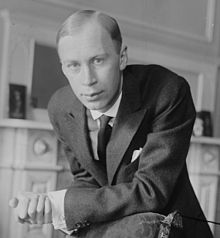
Sergei Sergeyevich Prokofiev ( 23 April 1891 – 5 March 1953) was a Russian composer, pianist and conductor who is probably best known, in Sunderland at least, as the composer of the ballet Romeo and Juliet – from which "Dance of the Knights" is taken ("The Apprentice" theme tune and, more importantly, the music that is played at the Stadium of Light before the start of each football match)
Prokofiev died at the age of 61 on 5 March 1953, the same day Joseph Stalin's death was announced. With the national outpouring of grief over Stalin's death, Prokoviev's death went unnoticed by the general population for a long time afterwards. He had lived near Red Square, and for three days the throngs gathered to mourn Stalin, making it impossible to carry Prokofiev's body out for the funeral service at the headquarters of the Soviet Composer's Union. He is buried in the Novodevichy Cemetery in Moscow. This is a picture I took of his grave in 2002. As a Sunderland AFC fan, I felt it important to make a pilgrimage to his grave, to mark my respects to the composer of the such atmospheric and stirring music which we have enjoyed at the Stadium of Light since 1997.

Incidentally, it's obviously 60 years since Stalin's death. The Moscow Times has an interesting article on the continuing influence or legacy of Stalinism in Russia:
The article cites as examples: the Moscow Metro, the seven sisters skyscrapers, “It’s the architecture of a totalitarian utopia,” with monumental scale, expensive decor and elements of historical styles from classicism to Gothic, said Natalya Samover, head of Arkhnadzor, a group that promotes architectural preservation; as well as the language of politicians and bureaucrats, and also mentality and structure of the FSB - the successor to the KGB.
Tuesday, 5 March 2013
Russian Language Notes - Hot Dogs
Kanikuli - Каникулы
It's a barmy 9 degrees Centigrade today in Newcastle; the sun is
shining, spring is in the air, and after the gloom if the winter, my thoughts turn to my holidays in the Summer.
The Russian word for holidays is kanikuli (Каникулы), which I have always thought was a
little odd. My knowledge of Russian isn't that great, but I couldn't spot any any obvious relationship with other Russian words, or any Latin
cognates that I could identify.
A few years ago when I was brushing up my
French, in preparation for a holiday there, I discovered that une canicule was a
French word for heat wave. It didn't occur to me to delve further - I was satisfied with my own explanation that the word was obviously imported into the Russian language along with many other French words and influences, owing to the fact that
the Russian nobility in Tsarist times used to speak French rather than Russian to distinguish themselves
from the lower classes.
I thought no more about it until I read "The Etymologicon" by Mark Forsyth last year and discovered
that there was a chapter called "Dog Days" about Sirius - the Dog Star. This is the largest star
in the Great Dog or Canis Major constellation. It stems from the Ancient
Greek word for dog - cyon. Which gives us
cynic (another story, but go read the book).
The ancient Greeks believed that their country was so hot during the summer owing to the combined rays of the Sun and Sirius - the ancient Greeks worked out that during the period 24 July to 24 August, Sirius was not visible in the night sky because it rises and sets at the same time as the Sun. The word Syrius means "scorching" but the ancient Greek also referred to it as cyon - dog. This period derived its name from the Dog Star and became known as canicula in Latin, giving us the phrase "Dog days" and the Russians "kanikuli".
Saturday, 23 February 2013
How about a picture of a Lada?

Saturday, 16 February 2013
Kto Oblomov? Who is Oblomov!
Kto Oblomov? Who is Oblomov!
Oblomov (Russian: Обломов) is the best known novel by Russian writer Ivan Goncharov, first published in 1859. Oblomov is also the central character of the novel, often seen as the ultimate incarnation of the superfluous man, a symbolic character in 19th-century Russian literature
Oblomov's distinguishing characteristic is his slothful attitude towards life which, Oblomov raises this trait to an art form, conducting his little daily business apathetically from his bed. He is forever contemplating making grand plans for his estate, to arrest its decline, but he never gets around to formulating them, let alone implementing them
Oblomov is a young, generous nobleman who seems incapable of making important decisions or undertaking any significant actions. Throughout the novel he rarely leaves his room or bed and just manages to move from his bed to a chair in the first 50 pages.
The character was seen as an allegory for Russia's ills, and russian history since the novel was published has often been viewed as a struggle against Oblomovshinoi (oblomov ism). It is probably best summed up by a famous quote from Viktor Chernomyrdin (9 April 1938 – 3 November 2010) former prime minister of Russia and was the founder and the first chairman of Gazprom:
"We wanted the best, but it turned out as always" (Хотели как лучше, а получилось как всегда in Russian)
I have always loved this novel, it struck a chord with me, as I identified with some of Oblomov's character traits, and I have often viewed my own life as struggle against my own inner Oblomovshinoi.
Oblomov (Russian: Обломов) is the best known novel by Russian writer Ivan Goncharov, first published in 1859. Oblomov is also the central character of the novel, often seen as the ultimate incarnation of the superfluous man, a symbolic character in 19th-century Russian literature
Oblomov's distinguishing characteristic is his slothful attitude towards life which, Oblomov raises this trait to an art form, conducting his little daily business apathetically from his bed. He is forever contemplating making grand plans for his estate, to arrest its decline, but he never gets around to formulating them, let alone implementing them
Oblomov is a young, generous nobleman who seems incapable of making important decisions or undertaking any significant actions. Throughout the novel he rarely leaves his room or bed and just manages to move from his bed to a chair in the first 50 pages.
The character was seen as an allegory for Russia's ills, and russian history since the novel was published has often been viewed as a struggle against Oblomovshinoi (oblomov ism). It is probably best summed up by a famous quote from Viktor Chernomyrdin (9 April 1938 – 3 November 2010) former prime minister of Russia and was the founder and the first chairman of Gazprom:
"We wanted the best, but it turned out as always" (Хотели как лучше, а получилось как всегда in Russian)
I have always loved this novel, it struck a chord with me, as I identified with some of Oblomov's character traits, and I have often viewed my own life as struggle against my own inner Oblomovshinoi.
Monday, 23 July 2012
Crowds are good - if you keep moving, open spaces are good ...
talking in the street is ok - if you have to...


Great success! I've finally worked out the location of the spy training scene from the Russia House - its in Symons Street London - a street that runs alongside the Peter Jones store in Knightsbridge. The quest to identify this scene has been a long one. In the film, Ned is seen waiting inside the doorway of a butcher's shop, whose name is visible on the shop window - Cobb of Knightsbridge.
A search on the internet for that company will tell you that there was a butchers of that name, latterly part of the Dewhurst chain which is no more, and their last known address was Clifton Road in Maida Vale. From a quick look on Google Streetview, it is clear that Clifton Road is not the location of this scene. I'd almost given up trying to identify the street, when I spotted a Cobb of Knightsbridge model delivery van on Ebay. On the van's livery, it is almost possible to read the original address - Symons Street. As you can see from the above photo, this street has changed quite a lot over the last 20 odd years - gone are all the original shops: a dry cleaners, buthers, tile shop, wine merchant; all to be replaced by The White Company which seems to occupy all the premises on this side of the street.

Subscribe to:
Posts (Atom)